War Time Variants:
In this section we will take a look at many of the "variations on a theme", so to speak, of the British Commando knife. Some of them are obviously semi-mass produced while others will be one-offs, or of very limited production. Many of the commando knives I own have come to me from perusing gun shows or on-line auctions. Many of them came from sources in Canada, including many of the rarest ones.
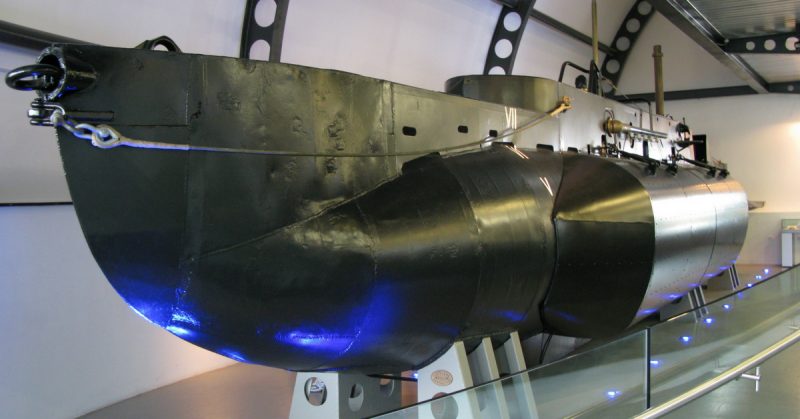
Photo of a WW-II X-craft (mini-submarine). Normally carried a three man crew but could hold more. Had an air lock where divers could enter and then flood it. or pump it out, to enter or leave the sub. Supposedly the "Bongle" style knife was used to tap on the hatch to signal when it was safe to open the hatch to enter the main compartment. https://www.warhistoryonline.com/world-war-ii/x-craft-mini-sub-wwii.html
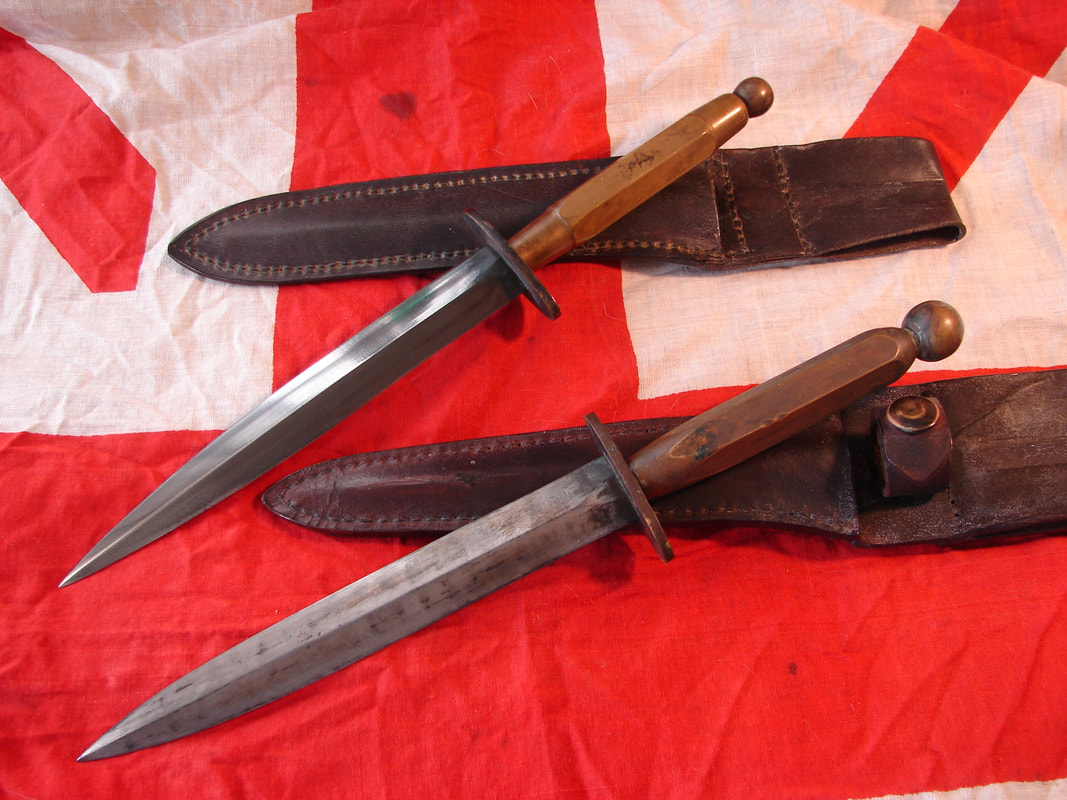
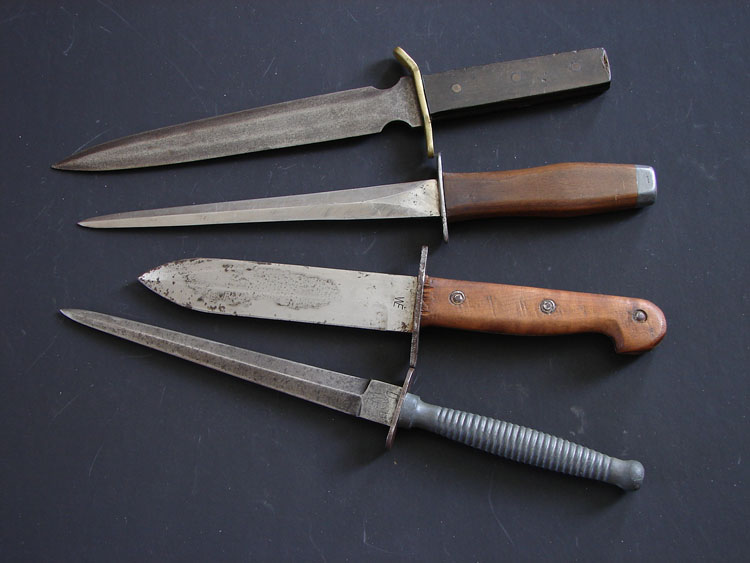
Below: The lower knife in this photo is the latest addition to my collection of the unusually designed "Bongle" knives. The aesthetics are not quite as nice as the top one but it is a very rugged knife with a heavy forged blade and larger ball pommel. The blade looks to have been blued originally but has lost most of the color due to wear. The seller said he only knew of three of these knives, the other one being in the collection of Bill Windrum.
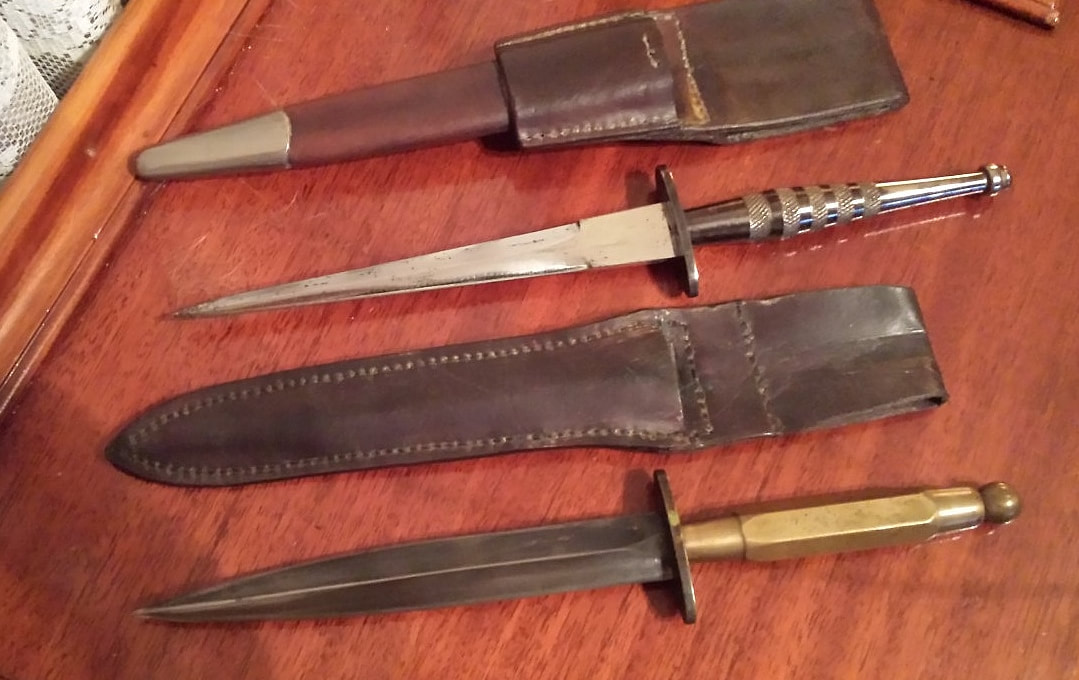
Below: The top knife is a "French Nail-head," but unlike any other I have ever seen. The most obvious difference is the blade with a sharply tapering profile and a long ricasso. Another oddity is the extremely slender handle and small nail head. The handle also appears to be silver plated instead of bare steel or tinned like some were. The sheath is a modified first pattern style with an added frog. The lower knife is referred to as having a "Bongle" handle. According to some writers it was used by frogmen to tap on the hull of their mini-subs to gain re-entry. I'm not sure I am buying that story but it is the traditional one. If you have more information on this very unusual style of knife please email me. Both knives have heavy blades
|
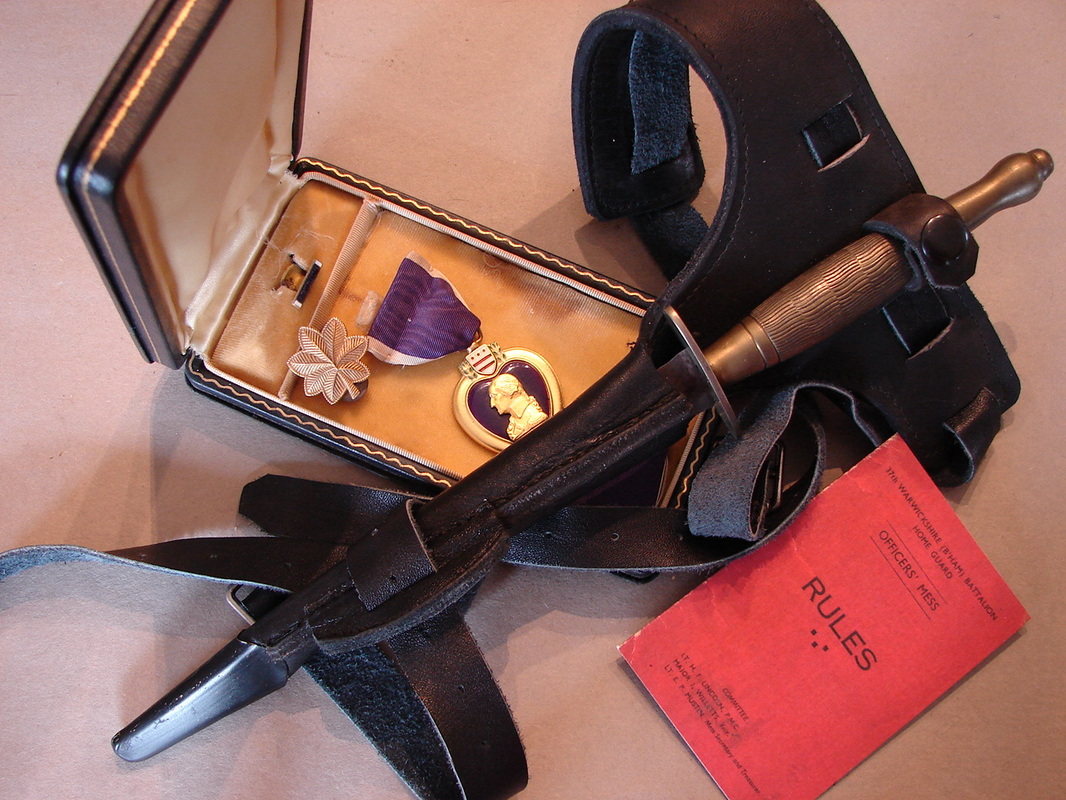
Below: This variant second pattern style knife is probably from India. It belonged to an American OSS Agent during WW-II. The leg sheath is a newly made copy. The Purple Heat was awarded to my father during the Vietnam War.
After the war many Commando knives made their way to Canada and the USA in nail kegs, sold to help defray England’s huge war debt. They were sold in hardware and sporting goods stores across the continent. They were sold in the advertisements of Sportsman’s magazines and pawn shops for a pittance. There was no sorting or grading that I am aware of and my elders used to say you could pick through a keg and pull out anything from the mundane to the rare because no one really cared anymore about these knives. The Commando knives were useless for hunting and oft-times picked up as an oddity or as a bit of nostalgia for the heroics of the Commandos. Many of these knives were subsequently damaged or destroyed by abuse or neglect, luckily many of them survived the war and careless post-war owners.
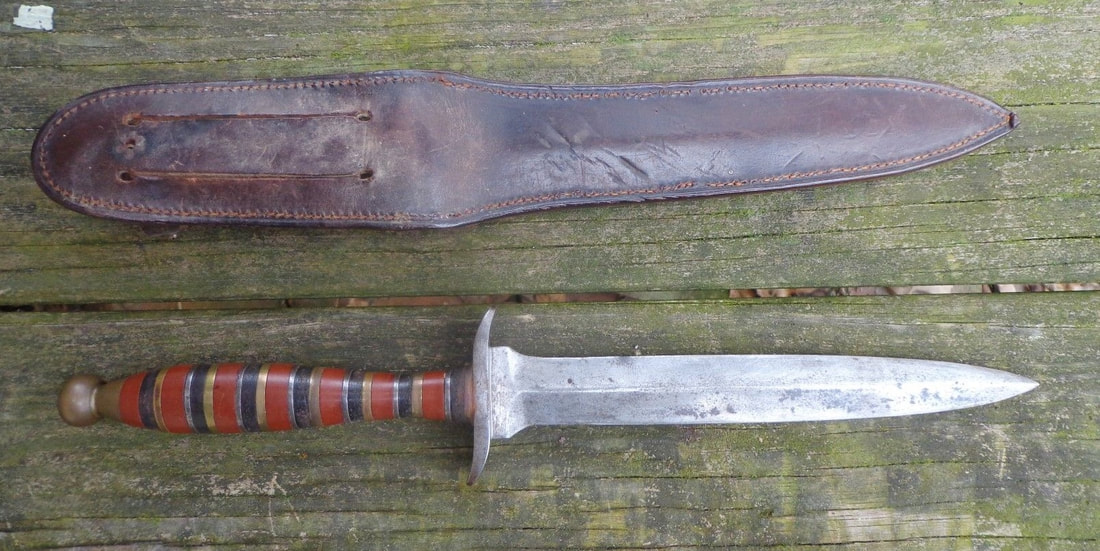
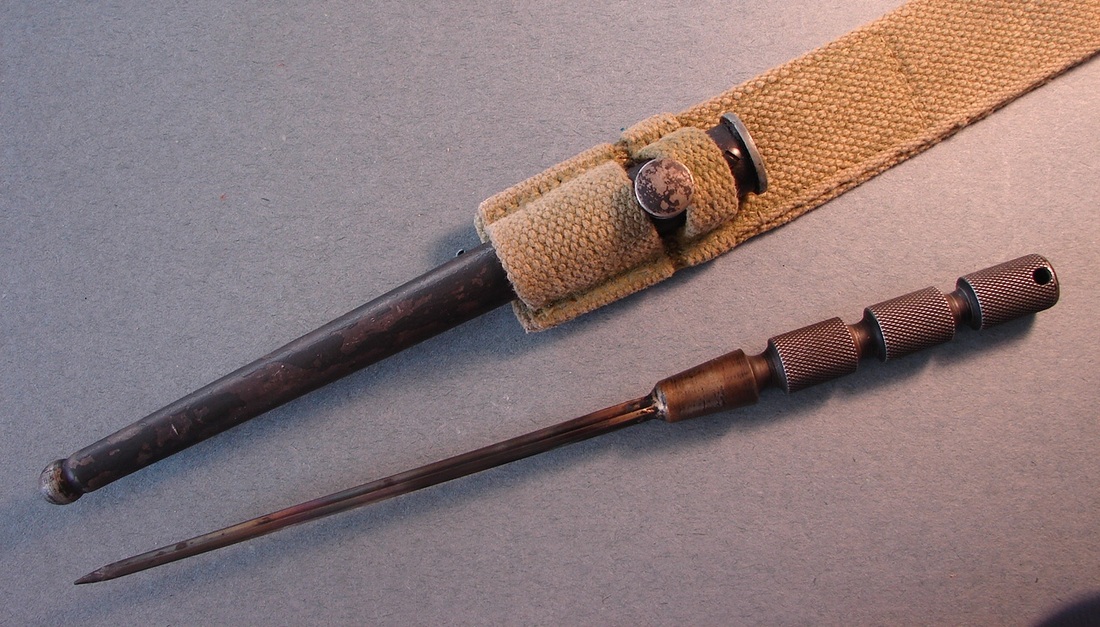
Below: is a knife that may or may not be wartime manufacture. It was made from a file, possible by a shipboard machinist. The nicely turned handle suggests a skilled machinist and proper lathe. The edge of the blade gives its provenance away by having some residual teeth indicative of a mill file. Other than lacking a strong, well defined, median ridge, it is a fine knife. I now believe this may be another knife of Indian manufacture.
|
I have never been privileged to buy a knife from its original owner and therefore few of the stories have traveled with the knives in my possession. My Commando Knives have been found in ones and twos, lying in piles of junk on gun show tables, or sometimes bought by the dozen. Many of the variants and odd-ball knives we will look at in these pages were the least expensive because no one wanted to take a chance on something that was unfamiliar, perhaps a fake, and possibly of no collector’s value. To me they are the ones that fascinate and intrigue, the ones without clear provenance. The down side to this is the possibility that you might be buying a fake, a made-up knife from bits and pieces, whether for unscrupulous gain or just to use up parts. In fact, as the war ended many legitimate firms did make up knives from bits and pieces to use up remaining stock and try to recoup some of their investment. Hopefully, by exploring and exposing some of these lesser known knives, you will be cognizant that one you have seen or are considering purchasing may have some legitimacy, or not.
Any outright fakes that I know of will be exposed although I am cautious in doing so since quite often, with time, what was once denounced as a fake is found to be authentic. Unfortunately sometimes the opposite is true and we learn from our mistakes. Whenever the authenticity of a knife is questionable you will be advised so that you can decide for yourself whether to take a chance on buying a similar one or not. As the saying goes “Caveat Emptor,” let the buyer beware. Or, as the Japanese saying goes, “Saru mo ki kara ochiru.” This translates as “even monkeys fall out of trees,” or sometimes even experts make mistakes. The knife illustrated below is most likely a fake.
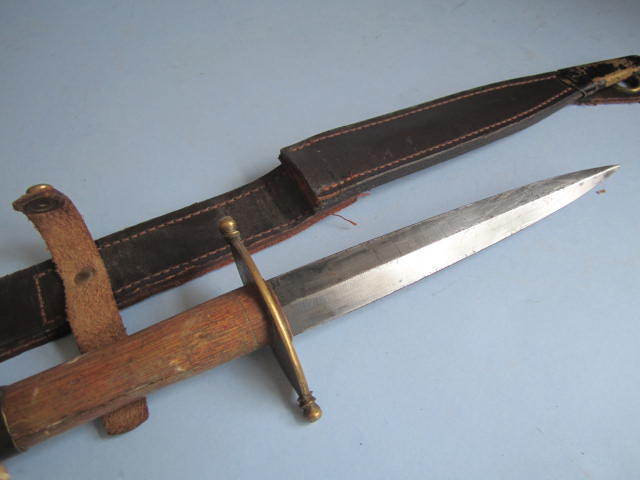
Above: I bought this knife solely for the sheath and blade, knowing the knife was a composite of pieces, a fake. The sheath is post-war for a V-42 but it suited my needs. This is a good example of a knife created out of parts, sold in England, not represented as being legitimate but not saying that it isn't either. So be cautious.
|
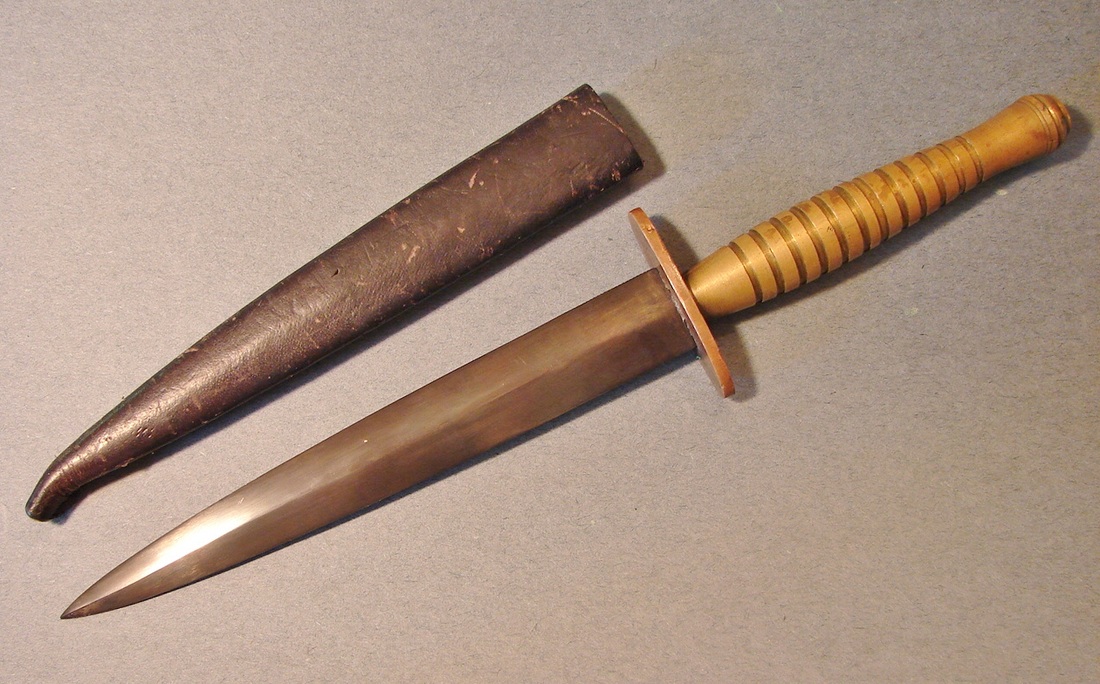
Below: This is not technically a Variant but more of a Theater-made knife. No matter what you call it, it is a viable fighting knife and well made at that!